Skip to content

PIONEER SCHOOL

BALL HOCKEY LEAGUE

COACHES CORNER

Overview
So you’ve volunteered to coach. That’s amazing! But don’t know what you got yourself into? This article is geared for first time coaches in order to wrap your head around what you signed up for. Again thanks for involvelment in youth sports. We cannot effectively run our programs without your participating.

1. Group Communications
2. Non-Mandatory Equipment
3. Roster Formation
4. Practices
5. Gameplan
6. Conclusion

Group Communications

We will provide you with the contact information for your team. To introduce yourself and create a team chat, send an introductory email include a brief introduction and a link to the team chat platform you’ve chosen. To use the team chat effectively, distribute important information such as practice times, locations, game schedules, and any other relevant updates throughout the season.

Personally I prefer not to have group texts however if you choose this method of communication make sure you have everyone’s contact info in advance so as to form one group message.

There are many other free communications apps out there such as BandGroupMeTeamSnap and many others.

By setting up and maintaining clear communication, you’ll help ensure that all team members are well-informed and engaged.
Chatgpt image feb 9  2026  02 48 45 pm

Non-Mandatory Equipment

Certainly do not want anyone spending money unnecessarily however the following are common issues during games:

Easy-tear tape (I’ll always have it at the bench but all shin pads should be tightly taped).

Water bottles with long straws (the squirt bottles really don’t work as most kids can’t take off their helmets and squirting the water into their face just gets them and their equipment unnecessarily wet).

You should also clearly label the water bottles as they all look the same.

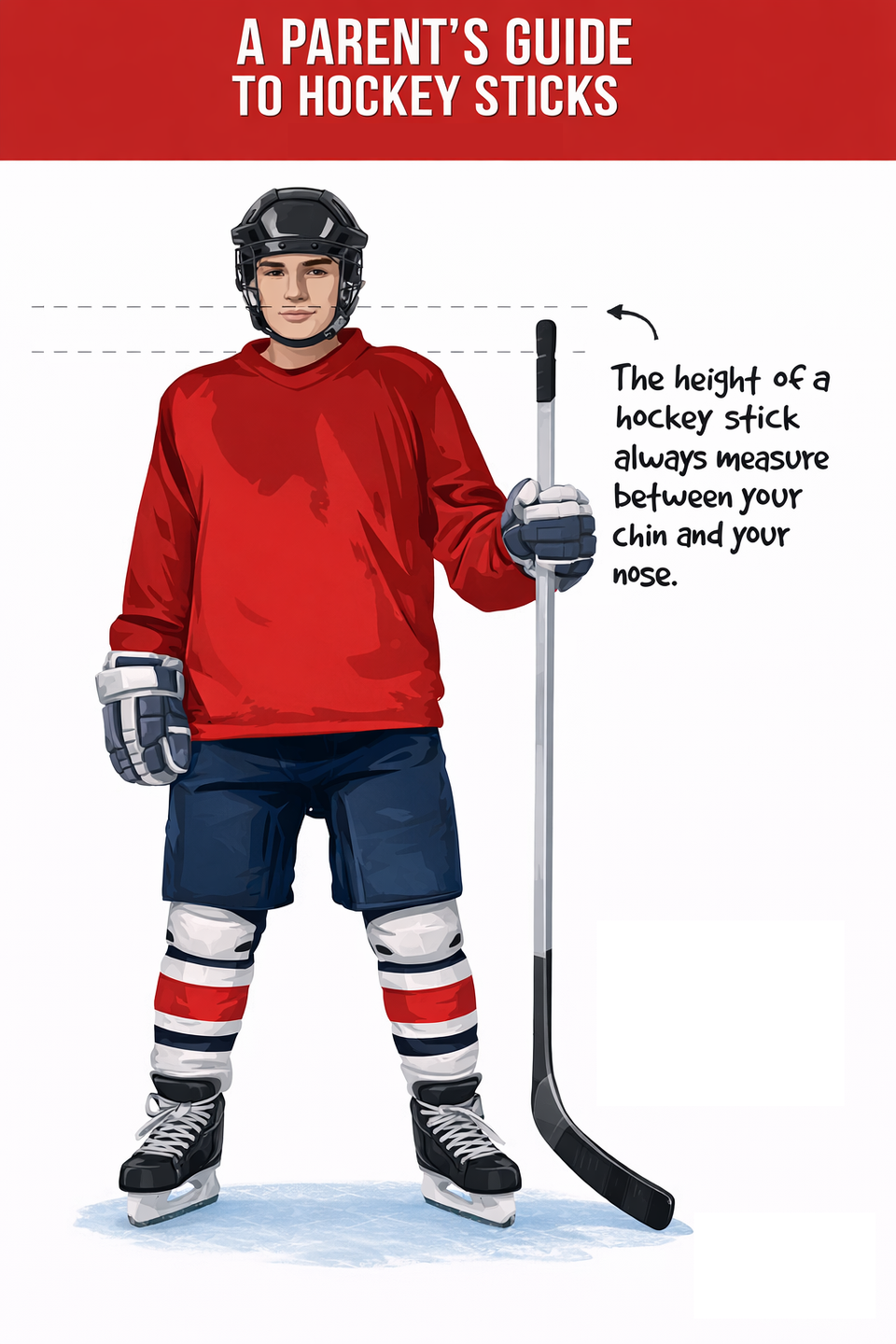
Stick: Regarding length, if you place the blade down on the floor, the part you hold should be between your son’s nose and chin as seen in the graphic above.


The blade should also be wide and not worn down if possible.

Also, my kids use 2 sticks: a game version (more expensive) and a practice (cheap) one. You shouldn’t spend a lot of $ on a stick only to have them grind it to a nub on the street. The expensive one I bought for my kids usually will last years if ONLY used on the rink during a game/practice.

Cup: all boys should be playing with one!

Helmet sweat liners: may not need them now but helpful in the summer!

Cold weather glove liners: my kids love them!

Compression arm/leg sleeves: my kids wear these under their jerseys so that they can ‘strap’ their elbow/knee pads to them, instead of their skin.

They also make a cold-weather fleece version: If not, the kids should definitely dress for the cold with layers underneath their jerseys.

You can search around for leg/pant variations (sometims with an integrated cup) as well, as necessary.

Again, none of these are necessities to play at all.

Roster Formation

The first thing you need to do is find out who wants to play what position. In the beginning I always tend to just go with whatever position they prefer. After a few games you can try moving things around.

Next you should find out who is left and right handed. For beginners it is easier if they stay on their strong side (ie left-handed kids should play left-wing or left-defense).

You need to also make sure their equipment is acceptable. In particular that their stick is not too long, which is very often the case. A good rule of thumb (per above) is that the end of the stick (the non-blade side) should come up to your players mouth.

To have balance, I suggest having kids of all different experience levels play together. If you group less experienced kids together they will not be as successful and you’ll feel pressure not to play them as often (which will not help them improve).

Practices

You should try to have practices at least once a week. And have an agenda before you arrive. You’ll need to bring plenty of balls. And possibly pinnies if you plan on running drills versus one another.

This guide provides tips and ideas for organizing effective drills and setting practice goals. Here are some key points to consider:

Drills and Organization: Incorporate a variety of drills to improve skills, tactics, and teamwork. Ensure practices are well-structured, with a clear progression from warm-ups to skill development, and finally, to scrimmages or game simulations.

Review Basic Rules: At the first practice, take time to go over the fundamental rules of the game, including offside, icing, and any other key regulations. This will help ensure that all players have a solid understanding of the game and can play more effectively.

Practice Goals: Set specific, measurable goals for each practice to track progress and keep the team focused. Goals can be skill-based, such as improving passing accuracy, or tactical, like enhancing defensive positioning.

Here are some websites that have additional suggested drills (some are for ice hockey however the principles apply):


Gameplan

1. Review the Rules: Before the first game, ensure you thoroughly review the rules to confidently address any questions from players or officials.

2. Track Attendance: Use the team chat you’ve set up for the season to monitor attendance. This will help you organize lineups and ensure you have a good starting point for each game.

3. Pre-Game Routine: Remind your team to arrive 20-30 minutes early. This time should be used for putting on equipment, discussing game goals, and warming up.

4. Post-Game Etiquette: After the game, encourage your team to first acknowledge the goalie with a “good game” message, regardless of the outcome. Then, line up for handshakes with the opposing team to show good sportsmanship.

I realize it’s not alway easy but try to remain positive behind the bench and focus on the good things that were done each shift. The players will feed off your mood. If you blame the refs for everything, they’ll pick up on that, etc.

After each game I like to have a team meeting to discuss what went right/wrong. You don’t to hand out a ‘player-of-the-game’ reward however something as simple as a helmet sticker with your team logo on it means a lot to them and often acts as motivation to improve.

Conclusion

I hope that you have found this introduction to coaching helpful. If you are thinking about becoming a Coach, or ever need anything never hesitate to reach out.
Contact Us